


Vitamin D is vital for human health, serving as the cornerstone for strong bones, healthy teeth, and a robust immune system. Interestingly, despite its historical name, vitamin D isn’t technically a vitamin at all. It is a prohormone—a precursor substance that the body converts into an active hormone.
While vitamins are typically essential nutrients that the body cannot manufacture on its own, your body can actually synthesize its own supply of Vitamin D using solar radiation.
How Vitamin D is Activated in the Body
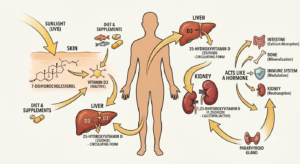
Vitamin D obtained from sunlight, food, or dietary supplements is initially biologically inactive. To become functional, it must undergo a two-step activation process (hydroxylation) within your organs:
-
The Liver Step: The liver converts raw vitamin D into 25-hydroxyvitamin D [25(OH)D], commonly known as calcidiol. This is the primary form measured in blood tests to evaluate your overall vitamin D status.
-
The Kidney Step: The kidneys take calcidiol and convert it into 1,25-dihydroxyvitamin D [1,25(OH)2D], also known as calcitriol. This is the physiologically active hormone that your body uses to regulate cells.
Top Health Benefits of Vitamin D
Once active, vitamin D binds to receptors throughout the nervous, digestive, circulatory, and immune systems, driving several key bodily functions:
-
Bone and Teeth Mineralization: It optimizes the absorption of calcium and phosphorus from your gut, which is fundamental to building dense bone structures.
-
Immune and Nervous System Support: It regulates immune cell behavior, shielding the body from acute infections and supporting cognitive health.
-
Blood Sugar Management: It aids in regulating insulin secretion, supporting therapies for metabolic syndromes and type 1 diabetes management.
-
Cardiovascular Health: It helps suppress the renin-angiotensin hormone system in the kidneys, which can assist in decreasing high blood pressure.
Dietary Sources: How to Get Enough Vitamin D
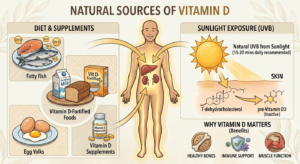
Because very few natural, unfortified foods contain abundant levels of vitamin D, intentional dietary planning is highly recommended.
Animal-Based Sources
-
Fatty Fish: Wild-caught salmon, mackerel, trout, and tuna contain the highest natural concentrations.
-
Cod Liver Oil: Just one teaspoon supplies over 450 IU.
-
Beef Liver & Egg Yolks: Provide smaller, natural amounts of vitamin D3 alongside healthy fats.
Vegetarian and Plant-Based Sources
For individuals following a vegetarian or vegan diet, obtaining sufficient vitamin D strictly from whole foods can be challenging. However, there are excellent options available:
-
UV-Exposed Mushrooms: Mushrooms are the only significant natural plant source of vitamin D. Varieties like Cremini or Portobello grown under sunlight can deliver high quantities of vitamin D2 per serving.
-
Fortified Tofu and Soy Products: Tofu processed with calcium and fortified with vitamin D can provide nearly 40% of your daily required intake per 100 grams.
-
Fortified Dairy & Plant Milks: Most commercial cow’s milk, soy milk, and almond milk are heavily fortified by manufacturers to combat widespread public deficiencies.
-
Fortified Juices and Breakfast Cereals: Ready-to-eat whole-grain cereals and fortified orange juice offer easy breakfast options, providing around 80 to 100 IU per serving.
How Much Vitamin D Do You Need?
The optimal daily intake of vitamin D varies based on age and life stage. The current daily recommended dietary allowances (RDA) are measured in International Units (IU):
| Age Group | Daily Recommended Amount (IU) |
| Infants (0–12 months) | 400 IU |
| Children & Adults (1–70 years) | 600 IU |
| Older Adults (71+ years) | 800 IU |
| Pregnant or Lactating Women | 600 IU |
Understanding Vitamin D Deficiency
A drop in circulating vitamin D compromises the skeleton and muscles. Common causes of clinical deficiency include severe dietary restrictions, malabsorption disorders (like celiac or Crohn’s disease), kidney or liver dysfunction, or living in northern latitudes with minimal year-round solar radiation.
Clinical Classifications and Treatment Protocols
Medical experts classify deficiencies using blood concentrations of 25-hydroxyvitamin D:
Vitamin D Insufficiency (20 to 32 ng/mL):
Typically managed using over-the-counter Vitamin D3 (cholecalciferol) supplements. A common daily therapeutic target is around 2,000 IU daily, tailored to individual needs.
Vitamin D Deficiency (Below 20 ng/mL):
Often requires clinical intervention using high-potency, prescription-strength Vitamin D2 (ergocalciferol). A standard medical protocol involves a dose of 50,000 IU taken once per week for 8 to 12 weeks, followed by regular blood evaluations every 3 to 6 months.
Actionable Tips to Safely Raise Your Levels
-
Get Responsible Sun Exposure: Spending 10 to 15 minutes outdoors with exposed skin a few times a week stimulates natural production. However, balance this carefully to mitigate long-term skin cancer risks.
-
Open the Windows: Standard indoor window panes block the specific ultraviolet B (UVB) wavelengths needed to spark vitamin D synthesis in human skin. If you are sitting inside for sunlight, ensure the window is completely open.
-
Consult a Physician: Before self-prescribing high-dose supplements, ask a doctor for a routine 25-hydroxyvitamin D blood test. This ensures you target the exact dosage your body needs to correct any imbalances safely.


