


In today’s world, alcohol is a staple of social life. Whether it’s a wedding, a milestone celebration, or just a weekend party, enjoying a drink with friends is a completely normal way to let loose.
However, if you are working hard toward fitness goals, it is crucial to understand exactly how alcohol is metabolized. By knowing the science behind how a drink affects your body, you can make smarter choices and prevent a night out from sabotaging your hard-earned gains.
The Science: How Your Body Processes Alcohol
To understand alcohol’s relationship with fat, we need a tiny bit of chemistry. When you drink, your liver immediately halts its normal processes to break down the alcohol, converting it into a compound called acetate. Acetate is then oxidized into carbon dioxide and water to be expelled from your system.
The Good News: Your body cannot directly store alcohol calories as fat.
The Catch: Because alcohol is technically a toxin, your body treats it as an emergency fuel source. Your metabolism completely pauses fat burning and carbohydrate burning until every drop of alcohol (acetate) is cleared from your system.
Alcohol contains 7 calories per gram, making it more calorie-dense than carbohydrates and proteins (4 calories/gram) and just under pure fat (9 calories/gram). A standard glass of red wine contains about 10 grams of alcohol, which translates to roughly 70 “empty” calories. Before your body can go back to burning its own stored fat, it has to burn through those 70 calories of alcohol first.
The Real Danger: How Alcohol Indirectly Makes You Fat
If the body can’t store alcohol as fat, why do heavy drinkers gain weight? The answer lies in how alcohol changes your hormones, behavior, and metabolism.
1. It Shuts Down Nutrient Metabolism
Because your liver is completely occupied with burning off acetate, any food you consume while drinking is ignored by your metabolic engine. The mixers in your drinks (soda, juices, syrups) cause your insulin levels to spike, sending a signal to your body to store nutrients. Since fat burning is paused, the carbohydrates and fats from your bar snacks, pizza, or burgers go straight into your fat stores.
2. It Spikes Cortisol (The Stress Hormone)
Your body views alcohol as a chemical stressor. In response, your adrenal glands release cortisol. High cortisol levels are scientifically linked to muscle breakdown and the deposition of visceral fat—the unfavorable “belly fat” or “spare tire” around your midsection that is incredibly difficult to lose.
3. It Disrupts Hunger Hormones (Leptin)
Alcohol alters the chemical signals that tell your brain you are full. A Swedish study revealed that levels of leptin—the primary hormone responsible for suppressing appetite—drop by nearly 50% after alcohol consumption. At the same time, studies show that individuals who drink an alcoholic beverage 30 minutes before a meal consume an average of 30% more calories because their natural fullness triggers are offline.
4. It Triggers Impulsive, Unhealthy Snacking
Alcohol lowers your inhibitions and impairs the frontal lobe of your brain, leading to impulsive behavior. You are far more likely to crave greasy, calorie-dense foods when drinking out than when sober at home. A study conducted at Dalhousie University found that 71% of habitual heavy drinkers also engaged in binge-eating episodes during or after drinking sessions.
5. It Alters Hormones and Fat Distribution
Consistent alcohol use can decrease overall fat breakdown and alter where your body distributes fat. Furthermore, alcohol can increase levels of estrogen by up to 20% after a single drink. Elevated estrogen can encourage fat storage around the chest and abdominal area in both men and women.
The Spectrum of Consumption: Binge Drinking vs. Moderation
Will an occasional drink ruin your physique? Science says no.
| Consumption Level | Impact on Body Composition & Health |
|
Moderate Drinking
(e.g., 1–2 glasses of wine per day) |
Generally not associated with increased belly fat or sudden weight gain. It increases insulin sensitivity slightly, helping maintain stable blood sugar when paired with a clean diet. |
|
Binge / Habitual Drinking
(e.g., Excess consumption on weekends) |
Creates a massive surplus of unutilized empty calories. Causes liver fat accumulation, which can trigger Fatty Liver Disease and potentially progress to cirrhosis. |
Practical Strategy: How to Balance Alcohol and Fitness
You do not have to live like a hermit to stay fit. If you choose to drink, use these baseline strategies to protect your metabolism:
-
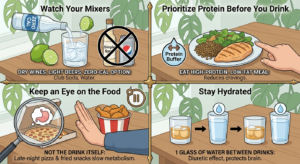
Watch Your Mixers: Avoid cocktails packed with simple sugars, syrups, or regular soda. Stick to dry wines, light beers, or spirits mixed with zero-calorie options like club soda or water.
-
Prioritize Protein Before You Drink: Since protein is rarely stored as fat and keeps you full, eat a high-protein, low-fat meal before your first drink. This creates a buffer in your stomach and reduces impulsive late-night food cravings.
-
Keep an Eye on the Food: Remember, it’s usually not the drink itself that causes rapid weight gain—it’s the late-night pizza, fried chicken, and greasy snacks consumed while your metabolism is paused.
-
Stay Hydrated: Alcohol is a diuretic. Drink one full glass of water between every alcoholic beverage to protect your brain function, manage your heart rate, and reduce the next-day hangover.
Final Verdict
Does alcohol make you fat? Yes and no.
When enjoyed in true moderation alongside a nutrient-dense diet and an active lifestyle, an occasional drink will not ruin your progress. It can be a great way to relax and celebrate. However, if drinking opens the door to massive caloric surpluses, hormonal disruption, and late-night binge eating, it will act as a major roadblock to your fat-loss journey. Balance, awareness, and strategy are everything.


