


In spite of what you might have heard on fitness forums, eating breakfast isn’t an absolute necessity for everyone. In fact, skipping breakfast entirely is far better than fueling your morning with processed junk foods like sugary cereals or pastries.
However, sitting down to a nutritious, well-balanced morning meal provides sustained energy, clears morning brain fog, and prevents you from overeating later in the day.
If your mornings are chaotic, you don’t have to cook an elaborate feast. Taking just a few minutes to grab a high-quality breakfast—even on the go—sets a healthy tone for your entire day.
The Proven Benefits of a Nutritious Breakfast
Adults who make time for a healthy breakfast consistently experience better health metrics across the board, including:
-
Increased daily intake of essential vitamins and minerals.
-
Better overall weight management.
-
Stable, predictable blood sugar levels.
-
Higher productivity and cognitive performance at work.
Fueling the Brain and Body
Think of breakfast as breaking an overnight fast—which is exactly where the name comes from. Without it, you are effectively running on empty, trying to start a car with no fuel in the tank.
Beyond calories, breakfast foods are excellent delivery systems for vital nutrients like calcium, iron, B vitamins, protein, and fiber. Nutritional research shows that if you miss out on these micronutrients in the morning, you are highly unlikely to make up for them later in the day.
The Impact on Your Waistline and Mood
Skipping breakfast often backfires. When your blood sugar crashes mid-morning, your brain screams for quick energy, making you far more likely to reach for high-sugar, high-fat convenience snacks.
Furthermore, breakfast restores glycogen stores, the essential carbohydrates your brain requires to function. Studies show that a solid morning meal improves memory, sharpens concentration, lowers stress levels, and elevates your mood.
Daily Energy Needs at a Glance
Your ideal caloric intake depends heavily on your age, gender, and physical activity levels. As a baseline rule, nutritionists recommend that breakfast should supply 20% to 35% of your Guideline Daily Amount (GDA) of calories.
| Group | Average Daily Calorie Needs | Target Breakfast Calories (20-35%) |
| Adult Men | ~2,500 kcal | 500 – 875 kcal |
| Adult Women | ~2,000 kcal | 400 – 700 kcal |
| Boys (Ages 7–10) | ~1,970 kcal | 394 – 690 kcal |
| Girls (Ages 7–10) | ~1,740 kcal | 348 – 609 kcal |
5 Whole Foods to Build a Weight-Loss Breakfast
1. Besan (Bengal Gram Flour)
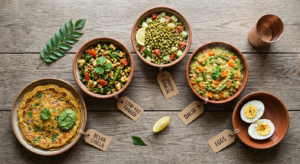
Besan is the ultimate kitchen staple. Made from ground chana dal, Besan is naturally gluten-free, rich in plant-based protein, and loaded with soluble fiber. It has a low glycemic index, which helps prevent insulin spikes and keeps random mid-morning sweet cravings at bay.
-
How to use: Whisk Besan with water, a pinch of turmeric, carom seeds (ajwain), chopped onions, tomatoes, and coriander to make a quick Besan Chilla (savory pancake). Cook it on a non-stick tawa with just a few drops of olive oil or ghee, and pair it with a home-made mint-coriander chutney for a delicious, high-protein breakfast.
2. Low-Fat Paneer (Cottage Cheese)
For vegetarians, paneer is an invaluable source of high-quality casein protein, which digests slowly to provide a steady release of amino acids. Opting for low-fat or home-prepared paneer keeps the overall calories low while keeping satiety levels high.
-
How to use: Make a quick, savory Paneer Bhurji loaded with tomatoes, onions, spinach, and green chilies. Enjoy it standalone or with a single slice of whole-wheat toast.
3. Sprouted Moong Dal (Green Gram)
Sprouting moong dal dramatically increases its vitamin content, makes the nutrients easier for your body to absorb, and boosts its fiber profile. It is incredibly low in calories but highly voluminous, making it a stellar option to prevent overeating.
-
How to use: Lightly steam a cup of sprouted moong, then toss it with chopped cucumber, tomatoes, coriander, a squeeze of lemon juice, and a pinch of chaat masala for a refreshing, crunchy breakfast salad.
4. Dalia (Broken Wheat)
If you prefer a warm, comforting breakfast, Dalia is a far superior, fiber-rich alternative to instant rolled oats or refined semolina (suji). Because it is minimally processed, it takes longer for your digestive system to break down, keeping your energy levels stable.
-
How to use: Cook it savory (Khichdi style) with plenty of seasonal vegetables like carrots, beans, and peas, using just a teaspoon of ghee for healthy fats.
5. Eggs (Ande)
Eggs are the gold standard for weight-loss proteins. They contain all nine essential amino acids and healthy fats that signal your brain that you are full.
-
How to use: Skip the heavy butter-laden omelets. Instead, boil two eggs and sprinkle them with black pepper and roasted cumin, or prepare a quick vegetable egg bhurji using minimal oil.
The Bottom Line on Weight Loss
Sustainable weight loss fundamentally requires a caloric deficit—burning more calories than you consume.
How you achieve that deficit depends entirely on your personal psychology. For some, a high-protein breakfast keeps them full, preventing midday snacking. For others, intermittent fasting (skipping breakfast) helps them keep their overall daily calories low. Find the patterns and nutritious foods you genuinely enjoy, avoid overly restrictive diets, and focus on long-term consistency.


