


Achieving your weight loss goals doesn’t mean giving up flavor. India’s rich culinary heritage is packed with nutrient-dense, high-fiber, and deeply satisfying options that align perfectly with modern fat-loss principles.
Weight management is about more than aesthetics. Maintaining a healthy BMI lowers systemic inflammation, reduces your risk of chronic illnesses like Type 2 diabetes and heart disease, and keeps your daily energy levels high.
By focusing on whole foods, lean proteins, and smart portion control, you can create a sustainable calorie deficit while enjoying traditional flavors.
The Food Matrix: What to Emphasize vs. What to Limit
Key Food Groups to Include
-
Lean Proteins: Chicken breast, fresh fish, tofu, paneer, eggs, and legumes (lentils, chickpeas, kidney beans). Protein preserves muscle mass and keeps you full.
-
Whole Grains: Oats, quinoa, brown rice, amaranth, millets (ragi/jowar), and whole wheat atta. These provide sustained energy and prevent blood sugar spikes.
-
Healthy Fats: Walnuts, almonds, chia seeds, flaxseeds, avocados, and cold-pressed oils used sparingly. These aid in nutrient absorption and hormone regulation.
-
Low-Fat Dairy: Greek yogurt, curd, buttermilk (chaas), or plant-based alternatives like unsweetened almond milk.
Items to Strictly Limit
-
Refined Carbs: White bread, maida-based items, pastries, and standard white pasta.
-
Liquid Calories: Sweetened juices, carbonated sodas, energy drinks, and heavily sweetened chai or coffee.
-
Deep-Fried Foods: Samosas, pakoras, batata vadas, and commercial chips.
-
Ultra-Processed Items: Instant noodles, frozen ready-to-eat meals, and packaged savory snacks high in sodium.
7-Day Indian Weight Loss Meal Plan
Note: Portions should be adjusted based on your individual caloric needs. Focus on cooking with minimal oil (sautéing, steaming, or baking).
Day 1
-
Breakfast: A bowl of savory or sweet oatmeal topped with a handful of fresh berries.
-
Mid-Morning: A small handful of almonds or roasted chickpeas (chana).
-
Lunch: A serving of mixed vegetable curry paired with a small portion of brown rice and a fresh green salad.
-
Evening: A cup of green tea accompanied by a whole apple or pear.
-
Dinner: Grilled or baked chicken breast (or paneer tikka) served with a side of stir-fried vegetables.
-
Bedtime: A small glass of warm turmeric milk.
Day 2
-
Breakfast: A vegetable omelet made primarily with egg whites, served with one slice of toasted whole-wheat bread.
-
Mid-Morning: Low-fat curd or Greek yogurt topped with a sprinkle of chia seeds.
-
Lunch: A comforting bowl of lentil soup (dal), a small portion of quinoa, and a mixed cucumber-tomato salad.
-
Evening: Crisp carrot and cucumber sticks dipped in home-made hummus.
-
Dinner: Baked fish (or grilled tofu) served with steamed broccoli and a small side of quinoa.
-
Bedtime: A soothing cup of unsweetened herbal tea.
Day 3
-
Breakfast: A plate of vegetable poha (flattened rice cooked with veggies and peanuts) with a side of low-fat curd.
-
Mid-Morning: A small bowl of fresh mixed berries or a seasonal fruit.
-
Lunch: Dal palak (spinach and lentil curry) with a small portion of brown rice and a side salad.
-
Evening: A cup of dry-roasted makhana (fox nuts).
-
Dinner: Grilled paneer tikka served with fresh mint chutney and stir-fried bell peppers.
-
Bedtime: A cup of warm milk infused with a pinch of cinnamon.
Day 4
-
Breakfast: Two small moong dal cheela stuffed with grated paneer.
-
Mid-Morning: A handful of walnuts or dry-roasted soybeans.
-
Lunch: Chickpea curry (chole) prepared with minimal oil, served with one whole-wheat roti and cucumber raita.
-
Evening: A tablespoon of roasted pumpkin seeds.
-
Dinner: Tofu stir-fry loaded with bell peppers, mushrooms, and broccoli, served with a minimal side of brown rice.
-
Bedtime: A cup of warm chamomile tea.
Day 5
-
Breakfast: Vegetable upma served with a light side of tomato or coconut chutney.
-
Mid-Morning: A cup of green tea and a fresh, crunchy sprouts salad.
-
Lunch: Rajma curry served with quinoa and a large mixed vegetable salad.
-
Evening: Crisp apple slices paired with one teaspoon of natural peanut butter.
-
Dinner: Grilled chicken tikka (or mushroom tikka) paired with mint chutney and charred vegetables.
-
Bedtime: A glass of warm turmeric milk.
Day 6
-
Breakfast: Mixed grain porridge made with oats and amaranth, cooked in low-fat milk and topped with flaxseeds.
-
Mid-Morning: A small seasonal fruit salad.
-
Lunch: Light vegetable biryani or pulao prepared with brown rice, served with a generous side of cucumber raita.
-
Evening: A handful of spiced, roasted chickpeas.
-
Dinner: Palak paneer paired with one whole-wheat roti and a raw garden salad.
-
Bedtime: A cup of warm ginger or herbal tea.
Day 7
-
Breakfast: Vegetable uttapam topped with onions and tomatoes, served with chutney.
-
Mid-Morning: A small handful of mixed unroasted nuts.
-
Lunch: Mushroom and bell pepper stir-fry seasoned with Indian spices, served with a small portion of brown rice.
-
Evening: A teaspoon of roasted flaxseeds.
-
Dinner: Grilled fish (or paneer) seasoned with tandoori spices, served with a side of quinoa and sautéed beans.
-
Bedtime: A cup of warm milk with a pinch of turmeric.
The Math: Calorie Deficits and Your Metabolism
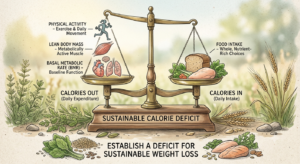
To lose weight sustainably, you must establish a calorie deficit—meaning you consume slightly fewer calories than your body burns to maintain its current weight.
Your total daily energy expenditure is driven by several key elements:
-
Basal Metabolic Rate (BMR): The baseline energy your body requires simply to keep your organs functioning at rest. This is determined by your age, height, biological sex, and current weight.
-
Body Composition: Muscle tissue is metabolically active. The more lean muscle mass you hold, the higher your resting metabolic rate will be.
-
Physical Activity: Regular daily movement, formal exercise, and strength training drastically elevate the total energy you burn, helping you maintain a healthy deficit without overly restricting your food intake.
-
Diet Quality: Whole foods rich in protein and fiber require more energy for your body to break down and digest. This is known as the thermic effect of food, and it works heavily in your favor during a fat-loss phase.
The Bottom Line
A successful weight loss journey doesn’t rely on temporary, extreme calorie deprivation. It relies on consistency. By focusing on whole, unprocessed Indian ingredients, keeping an eye on cooking oils, prioritizing lean proteins, and staying hydrated, you can achieve long-term fitness results while genuinely enjoying your meals.


